courtesy of VAI Music
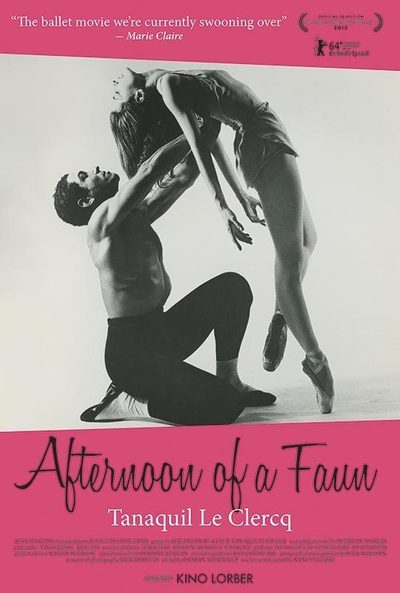
This morning, I had the pleasure of interviewing Allan Altman of Video Artists International — the label that has been preserving and bringing to the public, many historic fine arts performances on DVD and CD for years. We’d originally gotten in touch with each other partly because he’d found this blog and commented on last month’s entry about the Tanaquil Le Clercq documentary. I was thrilled that he agreed to this interview and found it fascinating to hear how they’re able to do what they do. I thought you, dear readers, perhaps would also be interested in their behind-the-scenes work as well as new releases they’re working on producing. Below is my interview with Allan:
I see by your website, VAI is enjoying its 30th Anniversary. Can you tell me how VAI got started, who established the company?
Video Artists International was founded by Ernest Gilbert in 1983. Ernie had been an executive at RCA Records in the days when they were still doing major classical projects, such as complete opera recordings. When Ernie began the VAI label, he was a pioneer in the field of performing arts programming on home video. It’s hard to imagine it today, but in 1983, the ability to see complete operas and ballets in your home – on demand, so to speak – was a new and exciting concept. Ernie was the President and CEO of VAI until he retired several years ago, when Edward Cardona (previously the company’s General Manager) took over.
As Production Coordinator for VAI, what is your role in producing the various DVDs and CDs?
At the risk of mixing metaphors: many roles, many hats, from soup to nuts. I’m involved, of course, in the selection of the programming (more on that below). Then there are the multitude of issues relating to licensing and clearances, involving the copyright-holders of the videos, music rights, performers clearances, etc. These tasks are divided between myself and Ed Cardona. We also work together on the look of the video packaging, which often involves more research and clearances for photos or other images. Of course, the “main course,” if you will, is the actual video material, which is often of historic vintage. I oversee the video editing and restoration, audio re-mastering, etc.
I see that you produce and publish a variety of DVDs and CDs across different genres in the world of historic artistic performances — from music, opera, ballet to musical theatre and jazz. With so much material out there to choose from, how do you decide what you’re going to produce and publish?
Everyone on the staff over the years has either been a musician or an avid follower of the arts. For example, founder Ernie Gilbert was an accomplished dancer in his youth and is still today a very fine amateur pianist. So, over the years, while we remain a commercial enterprise and aim to release products that will generate public interest, every potential release has been filtered through our artistic sensibilities. Like any arts-based organization, we cross our fingers and hope there will be enough people out there in the buying public whose tastes match ours! More specifically, there are what we could call “personal projects” – releases that have been tied closely to individual staff members. For example, Ed Cardona is a flutist on a professional level and jumped at the chance to approach the legendary flutist Julius Baker about issuing some of Baker’s recordings. A friendship developed between them and the result was two volumes of live recitals on CD, performances which had never before been made available to the public.
There is another very important component to our choice of material: the input we receive from customers. We regularly receive emails and phone calls with suggestions of programs to release. Sometimes these are programs which we already know about and are already researching, but sometimes we are made aware of something new, and that’s always very exciting. We are right now on the trail of a Balanchine-choreographed ballet produced by Radio-Canada that had not been listed in Radio-Canada’s database. Thanks to a call from a ballet fan alerting us to the existence of this program, we are now doing the research (I can’t divulge details yet) and hope to include it in our ongoing New York City Ballet in Montreal series.
Following the previous question, however do you go about your research and actually getting the material to publish? Can you describe the process for my readers?
Since the company has been around for 30 years, we already have close connections to a number of archives. Like our long-standing relationship with Canadian Television (made up of two divisions: the CBC in Toronto and Radio-Canada in Montreal), which makes up an important segment of our catalog. From CBC and Radio-Canada, we have ballets with Nureyev, operas with Joan Sutherland, instrumental programs featuring such legends as Jean-Pierre Rampal, etc. In other cases, we search out the copyright-holder of the program and proceed from there. Sometimes the performers (or their estates) need to be cleared separately, and we embark on the detective work of finding these people, a task definitely made easier by the existence of the Internet. Of course, in the process, there is the thrill of connecting with legendary artists of the past – dancers, actors, opera singers – many of whom had never seen their performances, which were telecast live before the days of video recorders, TiVo, or YouTube.
In particular for this blog, can you talk about upcoming Dance DVDs that will be available to the public for sale?
We are right now in the process of releasing a series entitled New York City Ballet in Montreal. These DVDs feature performances from the 1950s and ’60s, many with the original casts, and all with Balanchine present in the TV studio. In fact, we have learned through Joel Lobenthal (co-editor of Ballet Review, and the author of the insert notes for the series), who has interviewed many of the dancers in these programs, that, in the course of these television productions, Balanchine would occasionally make adjustments to the choreography based on his ability to view the dancers from different camera angles – adjustments that sometimes were brought back to New York to become part of the standard performing editions.
The third volume will include a very rare scene from Coppélia that Balanchine choreographed specifically for a 1954; it stars Tanaquil Le Clercq and André Eglevsky. The first two volumes are already available. As per the press release:
This first volume (http://www.vaimusic.com/product/4571.html) features two of Balanchine’s most beloved ballets. A 1957 performance of SERENADE stars Jacques d’Amboise, Diana Adams, and Patricia Wilde. Balanchine himself appears on screen to discuss ORPHEUS, performed here in 1960 by Nicholas Magallanes and Francisco Moncion dancing the roles they created for the work’s 1948 premiere, and Violette Verdy as Eurydice.
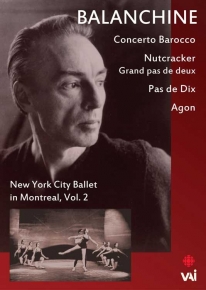
The second volume (http://www.vaimusic.com/product/4572.html) includes three complete Balanchine ballets. CONCERTO BAROCCO stars Diana Adams, Tanaquil Le Clercq, and Jacques d’Amboise. PAS DE DIX features principal dancers Maria Tallchief and André Eglevsky. AGON, a work Balanchine and Igor Stravinsky created for NYCB in 1957, includes original cast members Diana Adams, Arthur Mitchell, Todd Bolender, and Roy Tobias, in a 1960 performance. Rounding out the second disc is an interview with Balanchine as well as the Grand pas de deux from Balanchine’s THE NUTCRACKER performed by Adams and Nicholas Magallanes.
Please visit their website, www.vaimusic.com, for more information on their entire catalog of DVDs and CDs — find them on Facebook by clicking here — and to keep up with the latest from VAI, sign up for their special offers and new release alerts here.
 As the old year passes, I thought a look back at some of this year’s highlights with some of the major ballet companies (and not so major) would be a fitting way to look at where we’ve been and look forward to where we’re going. Below are 10 of my picks for a brief look at the world in ballet for 2016.